
Blog

10 Best Custom Indoor Trampoline Manufacturers?

Selecting the right Custom Indoor Trampoline manufacturer requires more than attractive photos and persuasive sales language. A safe, durable installation begins with the factory behind it. The best manufacturers understand frame engineering, impact protection, material performance, and commercial maintenance. They should explain their process clearly, not hide behind vague promises.

This guide reviews 10 Best Custom Indoor Trampoline Manufacturers using practical purchasing criteria. These include design flexibility, steel frame quality, jumping mat strength, padding density, safety net construction, and installation support. We also consider production experience, documented testing, warranty terms, replacement parts, and customer communication. Details matter. A galvanized frame can resist humid indoor environments, while tightly fitted edge cushions can reduce exposed gaps around the jumping surface. Reliable suppliers should provide drawings, load information, material specifications, and realistic delivery schedules.

No ranking is flawless. A manufacturer may offer excellent engineering but limited international service. Another may provide creative layouts but weaker after-sales support. That difference matters. Buyers should verify certifications independently and request recent project evidence before signing an order. Site dimensions, ceiling height, emergency access, flooring, and expected daily use can change the final recommendation. A small family entertainment center needs different solutions than a large training venue.

The companies featured here are assessed as potential partners, not automatic choices. Careful comparison remains essential. Ask difficult questions. Check the details. A trustworthy manufacturer welcomes that process. This introduction sets the context for evaluating quality, safety, customization, and long-term value in today’s Custom Indoor Trampoline market.
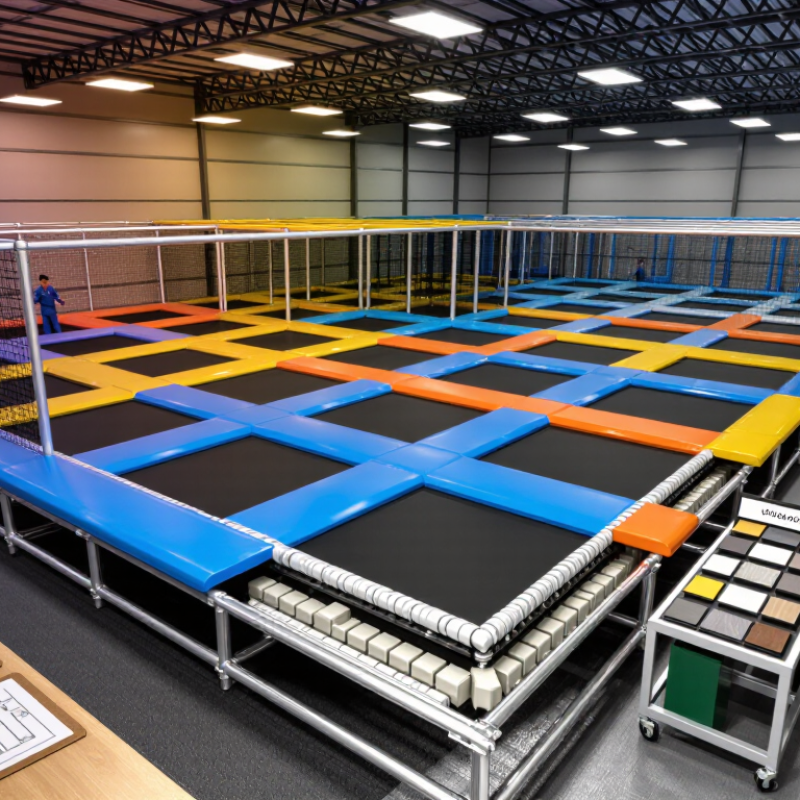
10 Best Custom Indoor Trampoline Manufacturers?

What Defines a Custom Indoor Trampoline Manufacturer

What Defines a Custom Indoor Trampoline Manufacturer

A custom indoor trampoline manufacturer does more than change colors, logos, or mat patterns. It translates a venue’s floor plan, visitor flow, safety targets, and maintenance habits into a tested system. That distinction matters. Grand View Research estimated the global trampoline park market at about USD 1.7 billion in 2023. It also projected a 10.6% compound annual growth rate from 2024 to 2030. Growth creates pressure, but customization should not sacrifice engineering. The American Academy of Pediatrics has cited roughly 100,000 annual U.S. emergency visits linked to trampoline injuries. A responsible manufacturer therefore follows ASTM F2970 guidance, documents load testing, and explains inspection intervals. Foam thickness alone proves little.

A strong supplier provides drawings, anchoring details, material specifications, and installation tolerances. It should simulate traffic around dodgeball courts, landing zones, climbing elements, and narrow walkways. Factory quality checks should include weld inspection, padding compression, net attachment, and repeated-impact testing. Ask for test records, not polished promises. In practice, some suppliers measure the equipment carefully but overlook cleaning access beneath platforms. That is a costly weakness. A custom design must support daily staff routines, replacement parts, ventilation, and future expansion. Perfect planning is uncommon. Honest revision is better.

Tips: Request a sample inspection report and a full maintenance schedule. Compare the stated test method with ASTM requirements. Ask who approves design changes after installation. Check whether replacement pads use consistent dimensions. Small gaps become large service problems. Select a manufacturer willing to explain limitations, not only advantages.

Key Features of High-Quality Indoor Trampolines

When comparing custom indoor trampoline manufacturers, focus on measurable construction details, not colorful padding. High-quality trampolines use galvanized or powder-coated steel frames, reinforced welds, and tightly anchored legs. The jumping bed should resist stretching and abrasion after repeated commercial use. ASTM F2970-15 covers design, installation, operation, maintenance, and inspection for commercial trampoline courts. Ask manufacturers to provide test records and material specifications.

Safety zones require equal attention. Thick, flame-resistant padding should cover exposed frames and springs without shifting during use. Netting needs small openings, strong stitching, and secure attachment points. The U.S. Consumer Product Safety Commission’s NEISS data has repeatedly estimated over 100,000 trampoline-related injuries treated in emergency departments annually. That figure makes impact absorption and routine inspection practical priorities, not decorative upgrades. I have seen attractive equipment fail because anchors loosened under daily traffic. A polished surface proves very little.

Tips: Request load testing, seam-strength results, fire-resistance documents, and installation drawings. Check whether replacement mats and padding remain available. Measure clearances before ordering. Also, ask how often the manufacturer recommends checking springs, anchors, stitching, and frame joints. A custom design may fit the room perfectly, yet still create blind spots near walls or exits. Small mistakes matter. Cite the current ASTM requirements and local facility guidance before approving production.

How to Evaluate Customization, Safety, and Durability

How to Evaluate Customization, Safety, and Durability

A custom indoor trampoline should fit the room, not merely fill it. Measure ceiling clearance, emergency paths, columns, ventilation, and spectator zones before discussing colors or layouts. ASTM F2970 covers commercial trampoline design, installation, operation, maintenance, and inspection. Ask manufacturers for compliance records, engineering drawings, and load-test results. A glossy sample proves very little.

Safety details deserve physical inspection. Look for continuous padding, protected springs, sealed foam joints, non-slip platforms, and clear separation between jumping areas. CPSC injury surveillance has historically estimated more than 100,000 trampoline-related emergency visits annually in the United States. That figure makes staff training and daily inspections essential, not optional. Request cleaning procedures, replacement schedules, and documented fall-zone measurements. Small gaps matter.

Durability begins beneath the surface. Inspect weld quality, frame thickness, anchor design, fabric tensile strength, and foam recovery after repeated compression. Ask whether testing reflects real use, including wet cleaning, heavy traffic, and uneven jumping. ISO 4892-3 testing can help assess polymer aging, although indoor equipment still faces disinfectants and sunlight near windows. I would question any supplier promising “maintenance-free” performance. It sounds convenient, but it is rarely realistic. A stronger evaluation includes a factory visit, sample installation, reference projects, and a written warranty covering labor, parts, and structural defects.

10 Best Custom Indoor Trampoline Manufacturers? — How to Evaluate Customization, Safety, and Durability

This evaluation framework assigns the greatest weight to safety verification and structural durability. Buyers should request evidence of compliance with applicable standards, including ASTM F381 where relevant, together with load testing, frame and spring specifications, warranty terms, replacement-part availability, and documented customization capabilities.

Leading Custom Indoor Trampoline Manufacturers to Consider

Leading Custom Indoor Trampoline Manufacturers to Consider

Choosing among the 10 best custom indoor trampoline manufacturers requires more than comparing prices. A suitable supplier should handle layout design, frame engineering, padding, lighting, and installation. Grand View Research reported strong growth in the global trampoline park market, with demand supported by family entertainment and indoor recreation. That growth also increases supplier differences. Some manufacturers offer attractive renders but limited engineering details. That is a warning sign.

Experienced buyers should request load ratings, material specifications, warranty terms, and maintenance schedules. ASTM F2970 provides useful guidance for trampoline court design, operation, and inspection. EN 1176 may also matter when the project includes connected play structures. Ask for test records from independent laboratories, not only factory statements. A reliable manufacturer should explain spring fatigue, foam density, anchoring points, and emergency access clearly. Small details matter. A poorly planned landing zone can create expensive repairs.

Tips: Measure ceiling height before discussing the final layout. Leave clear space around exits, columns, and fire equipment. Request a full-scale sample of the jumping mat and edge padding. Visit an operating facility, if possible. Listen for excessive frame movement and inspect exposed fasteners. Also compare cleaning procedures and replacement-part availability. A cheaper quotation may exclude shipping, installation, inspections, or staff training. I would not select a supplier from glossy images alone; real operating evidence is more convincing.

10 Best Custom Indoor Trampoline Manufacturers? - Leading Custom Indoor Trampoline Manufacturers to Consider
Rank Anonymous Manufacturer Profile Best-Fit Facility Typical Custom Jumping Area Frame & Structure Safety Padding Custom Design Capability Typical Production Lead Time Documentation to Request
1 Large Commercial Park Specialist High-traffic trampoline parks and family entertainment centers 500–5,000 m² Powder-coated steel modules with reinforced anchor points 50–100 mm closed-cell foam with PVC-coated cover Very High
Layout engineering, themed zones, custom obstacle integration
10–16 weeks Load calculations, installation drawings, material specifications, inspection records
2 Compact Urban Venue Specialist Shopping centers, indoor playgrounds, and smaller entertainment venues 100–600 m² Modular galvanized or powder-coated steel sections 40–75 mm impact-absorbing foam High
Space-efficient layouts and irregular room adaptations
8–12 weeks Room survey checklist, floor plan, anchoring details, maintenance schedule
3 Sports Training Equipment Specialist Gymnastics centers, athletic clubs, and training facilities 40–400 m² High-tensile steel frame with replaceable bed components 50–100 mm professional-grade padding High
Performance zones, landing areas, and training configurations
8–14 weeks Spring or bed tension data, structural calculations, user-load limits, test reports
4 Soft-Play Integration Specialist Indoor playgrounds combining trampolines, climbing, and soft play 150–1,200 m² Steel frame integrated with padded platforms and soft-play structures 50–100 mm foam padding with sealed edge protection Very High
Multi-activity designs, tunnels, slides, and padded barriers
10–18 weeks Component drawings, fire-rating information, cleaning instructions, risk assessment
5 School and Community Facility Specialist Schools, recreation centers, municipal gyms, and community halls 30–300 m² Heavy-duty steel frame designed for repeated supervised use 40–75 mm removable safety pads Medium–High
Accessible layouts and low-maintenance configurations
6–12 weeks Warranty terms, user-capacity guidance, installation manual, safety inspection checklist
6 Premium Themed Attraction Specialist Branded entertainment venues and destination attractions 300–3,000 m² Custom-fabricated steel modules with decorative architectural elements 50–100 mm foam with custom-printed or themed covers Very High
Color systems, scenic elements, lighting, and branded environments
14–24 weeks 3D renderings, engineering package, finish samples, fire and material certificates
7 Export-Oriented Modular Supplier International distributors and multi-site indoor recreation projects 100–2,000 m² Knock-down steel modules optimized for container shipment 40–75 mm modular foam pads High
Configurable modules and region-specific packaging
8–16 weeks Container loading plan, packing list, assembly guide, spare-parts catalog
8 Fitness and Boutique Studio Specialist Fitness clubs, boutique studios, and hotel recreation areas 20–200 m² Low-profile steel frame with reinforced high-use sections 30–60 mm impact padding Medium
Compact footprints, neutral finishes, and low-noise options
6–10 weeks Noise-control details, floor-protection requirements, cleaning guidance, warranty policy
9 Engineering-Led Bespoke Manufacturer Architect-designed venues and projects with unusual building constraints 50–2,500 m² Project-specific steel engineering with surveyed anchor locations Specified according to impact zones and circulation requirements Very High
Non-standard rooms, sloped floors, columns, and suspended elements
12–20 weeks Signed engineering calculations, site survey, installation method statement, acceptance criteria
10 Replacement and Renovation Specialist Existing trampoline parks requiring refurbishment or capacity upgrades 50–2,000 m² Replacement modules compatible with surveyed existing structures New foam, covers, edge pads, and replacement jump beds High
Retrofit planning, component matching, and phased installation
4–10 weeks Compatibility report, replacement-part list, condition survey, retrofit warranty
Comparison data represent practical industry ranges for custom indoor trampoline projects. Actual dimensions, lead times, safety systems, and certification requirements should be confirmed through project drawings, site surveys, and manufacturer documentation.

Choosing the Right Manufacturer for Your Indoor Facility

Choosing a custom indoor trampoline manufacturer starts with your facility, not a catalog. Measure ceiling height, emergency paths, floor structure, and expected visitor flow. A reliable supplier should request drawings, study site conditions, and explain design limits clearly. Ask for material specifications, impact-absorbing padding, anchoring methods, and inspection procedures. Custom work is more than bright colors. It must fit the room without creating blind corners or awkward queues.

Request evidence of previous installations, realistic production timelines, and detailed warranty terms. Speak with facility operators who have used similar equipment for several years. Their maintenance experience can reveal problems hidden during a showroom visit. Check how the manufacturer handles replacement pads, spring wear, damaged stitching, and future layout changes. A low quote may look attractive, but weak support can create expensive downtime. I would also question vague safety claims. Clear documents matter more than confident promises.

Tips: Compare manufacturers using the same checklist. Visit one completed facility if possible. Watch how staff inspect the equipment. Ask who supervises installation and what training is included. Leave space for repairs and cleaning access. Do not ignore small details, such as exposed fasteners, slippery entry zones, or padding that shifts under pressure. Some choices may still need revision after opening, so select a manufacturer willing to listen, measure performance, and improve the design.

By continuing to use the site, you agree to the use of cookies. more information

The cookie settings on this website are set to "allow cookies" to give you the best browsing experience possible. If you continue to use this website without changing your cookie settings or you click "Accept" below then you are consenting to this.

Close