Choosing a reliable Welded Steel Pipe supplier requires more than comparing prices, production volume, or website claims. This market serves oil and gas, water infrastructure, construction, energy, and industrial fabrication. Each application demands different steel grades, wall thicknesses, outside diameters, and testing procedures.
Dr. John C. Lippold, a respected welding metallurgy expert, has stated, “Welding is a process, not a product.” His observation explains why supplier evaluation must examine manufacturing discipline, not only finished pipe appearance. A clean surface can hide inconsistent weld penetration. A polished certificate can still require careful verification.
This guide reviews ten global suppliers through practical criteria. These include production capacity, welding technology, dimensional control, coating options, inspection systems, delivery performance, and project experience. It also considers standards such as API, ASTM, EN, and ISO requirements, where relevant. Factory audits, traceability records, and independent testing may reveal details that brochures omit.
Real projects are rarely simple.
A large mill may offer excellent capacity but limited flexibility for smaller orders. A regional supplier may provide faster communication and customized support, yet face narrower product availability. Buyers should compare actual project needs against documented capabilities. Price alone can create expensive delays, rejected batches, or field repairs.
The ranking is intended as a practical starting point, not an absolute verdict. Supplier performance can change with ownership, equipment upgrades, raw-material conditions, and regional logistics. Readers should confirm current certifications, inspection reports, lead times, and technical terms before signing contracts. That extra review may feel slow. It is often the most efficient step.
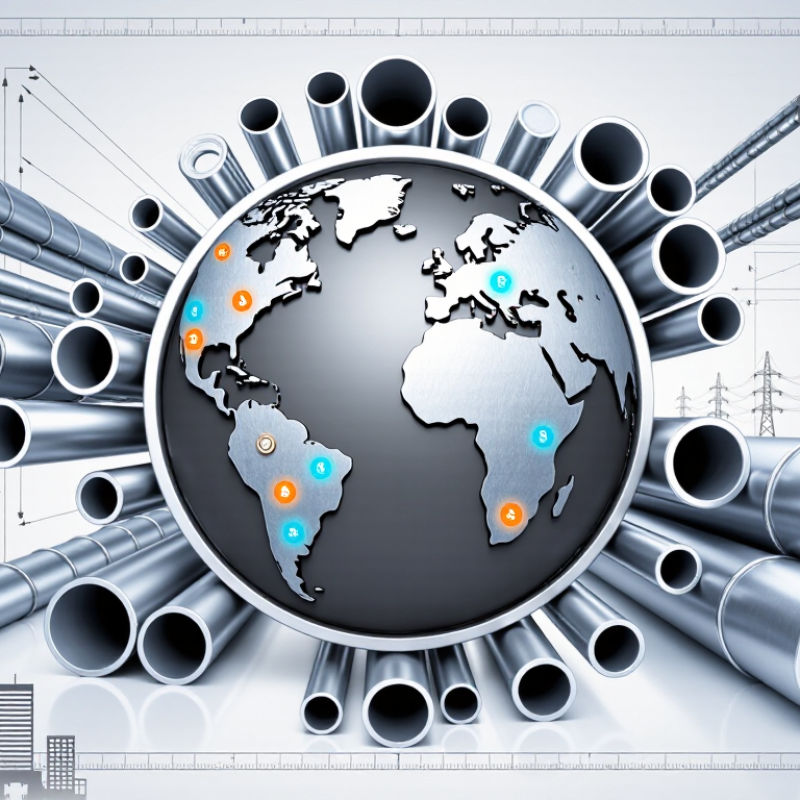
Welded steel pipe is made by forming steel plate or strip into a tube and joining the seam with heat, pressure, or both. It is not seamless. Its visible weld line distinguishes it from seamless pipe and helps inspectors trace production quality. Common types include electric resistance welded (ERW) pipe, longitudinal submerged arc welded pipe, and spiral welded pipe. Each type suits different diameters, wall thicknesses, and pressure conditions.
ERW pipe often serves water networks, building columns, and low-to-medium pressure systems. Longitudinal welded pipe supports larger infrastructure, including transmission lines and industrial process facilities. Spiral welded pipe can produce wide diameters efficiently, making it useful for drainage, piling, and water conveyance. Details matter. Engineers should check steel grade, weld procedure, dimensional tolerance, coating, and non-destructive testing records before approval.
Global applications vary with climate, soil, and local standards. In coastal areas, external corrosion protection deserves close attention. In cold regions, impact toughness may become a deciding factor. Field experience shows that a lower purchase price can create higher maintenance costs when coating preparation is weak. That assumption fails. Reliable suppliers should provide traceable mill certificates, pressure-test results, and inspection documentation aligned with recognized international or national standards. Even careful specifications can miss installation realities, especially where transport damage, uneven foundations, or poor site welding changes performance. Teams should review those risks before selecting pipe for a long service life.
Evaluating worldwide welded steel pipe suppliers requires more than comparing quoted prices.
The World Steel Association’s October 2024 outlook forecasts global steel demand at about 1.75 billion tonnes in 2024. This scale increases the need to verify production consistency, not merely production capacity. Ask for recent mill test certificates, heat numbers, welding procedures, and non-destructive testing records. ISO 3183 and relevant ASTM specifications can provide a technical baseline, but certificates still require independent checking.
A reliable supplier should disclose steel grades, pipe dimensions, wall-thickness tolerances, and coating methods. Confirm whether ultrasonic, radiographic, or hydrostatic testing matches the project specification. Inspect sample ends and weld seams when possible. Small defects matter. They can become expensive failures.
The OECD’s 2024 steel market analysis highlights continuing capacity pressure and uneven market conditions. Therefore, delivery promises deserve evidence. Review historical lead times, shipment records, reserve production capacity, and port-handling experience. Traceability should continue from steel coil to finished pipe. Independent factory audits improve confidence, especially for overseas orders. Financial stability also matters because unstable suppliers may substitute materials or delay corrective action. However, audits are not perfect. A single visit cannot represent every production shift. Buyers should combine document reviews, random inspections, laboratory verification, and post-delivery performance data. Cost remains important, but the lowest offer may conceal testing gaps, weaker coatings, or incomplete technical support.
Top 10 Welded Steel Pipe Suppliers Worldwide
The leading ten welded steel pipe suppliers compete through production strength and market reach. Their mills typically serve construction, water systems, energy, and industrial projects. Production capacity matters, but consistency matters more. A large facility means little if weld quality varies between batches.
Reliable suppliers operate modern forming lines, automated welding equipment, and traceable inspection systems. They test pipe dimensions, coating thickness, tensile strength, and weld integrity. Experienced teams also understand regional standards and project documentation. This practical knowledge reduces delays at ports, fabrication yards, and construction sites.
Market reach reveals another layer of performance. Strong suppliers maintain warehouses near major shipping routes and support regular export volumes. They can often provide multiple diameters, wall thicknesses, and surface finishes. However, published capacity figures deserve careful review. Some include theoretical output, not actual annual production. That difference can affect delivery planning. A ranking can mislead.
Buyers should compare audited production data, quality certificates, lead times, and after-sales response. A supplier with fewer facilities may still perform better through flexible scheduling and closer technical support. I would also check recent project records, because old success does not guarantee current reliability. Real performance appears in shipment consistency, clear communication, and pipes that arrive ready for use.
Top 10 welded steel pipe suppliers by production scale and market reach
This anonymized comparison uses normalized scores from publicly reported production capacity, export activity, product range, and geographic coverage. A score of 100 represents the strongest position within the comparison set; the index is comparative and does not represent reported tonnage.
A useful Top 10 welded steel pipe list should explain more than production capacity. Each supplier profile should identify pipe types, sizes, wall thicknesses, and forming methods. ERW pipes suit many water and structural projects. LSAW pipes support large diameters and demanding transmission lines. SSAW pipes can serve extensive infrastructure work, but inspection details matter.
Standards reveal a supplier’s technical discipline. Profiles should mention applicable specifications, such as ASTM A53, ASTM A106, API 5L, EN 10217, or ISO-based quality systems. They should also clarify welding procedures, heat treatment, coating options, hydrostatic testing, and traceability. Industry coverage may include oil and gas, construction, water treatment, piling, and power generation. Service coverage deserves equal attention. Stock availability, cutting, beveling, packaging, mill certificates, third-party inspection, and export documentation can influence project risk. Claims should be checked against current certificates and sample inspection records. Marketing language is not evidence.
Ask for recent test reports. Confirm manufacturing location, delivery terms, and corrosion protection before ordering. A responsive technical team can resolve drawing changes quickly, although response quality may vary between offices. Buyers should compare tolerances, not only prices. Some profiles may omit useful details, such as batch traceability or weld repair policies. That omission deserves a question, not an assumption. A practical supplier review should leave room for doubt and verification.
Selecting welded steel pipe suppliers requires more than comparing quotations. Quality should be checked through mill test certificates, chemical composition, tensile results, dimensional records, and weld inspection reports. Confirm wall thickness tolerance and outside diameter at several points, not just one sample. For coated pipe, request coating thickness readings and surface preparation details. A reliable supplier should explain traceability from raw coil to finished pipe.
Certification must match the project specification and destination requirements. Check whether the supplier operates under a recognized quality management system and can provide certificates from an independent inspection body. Pricing should include more than the pipe itself. Calculate inspection fees, packaging, inland transport, insurance, duties, and possible currency changes. A cheap offer may become expensive after corrections or delays. I have seen procurement plans fail because delivery dates were treated as promises, not production schedules.
Tips: Ask for a complete technical offer. Compare identical specifications. Request recent inspection evidence. Confirm the shipping port, Incoterm, batch size, and realistic lead time. Keep written records of every tolerance and certificate requirement. Also, leave a small schedule buffer; even careful suppliers can face material shortages or port congestion. Mistakes happen. Good purchasing systems make them visible early.
Anonymous supplier comparison based on commonly published international standards, product capabilities, and indicative market benchmarks
| Rank | Supplier ID | Primary Supply Region | Main Manufacturing Process | Typical Product Scope | Common Applicable Standards | Quality Certifications | Typical Outside Diameter | Indicative Export Price* | Typical Production Lead Time | Recommended Purchasing Priority |
|---|---|---|---|---|---|---|---|---|---|---|
| 1 | Supplier 01 | East Asia | High-frequency welded (HFW/ERW) | Line pipe, structural pipe, mechanical tubing | API 5L, ASTM A53, ASTM A500, EN 10219 | ISO 9001; ISO 14001; ISO 45001 | 21.3–610 mm | US$650–1,150/metric ton | 25–45 days | Balanced value |
| 2 | Supplier 02 | South Asia | Spiral submerged-arc welded (SSAW) | Water transmission, piling, low-pressure fluid service | API 5L, ASTM A252, AWWA C200, EN 10224 | ISO 9001; ISO 14001 | 219–3,200 mm | US$620–1,050/metric ton | 30–55 days | Large diameters |
| 3 | Supplier 03 | Europe | Longitudinal submerged-arc welded (LSAW) | Transmission pipe, offshore pipe, heavy structural pipe | EN 10219, EN 10224, API 5L, ISO 3183 | ISO 9001; ISO 14001; ISO 45001 | 406–1,422 mm | US$900–1,600/metric ton | 45–75 days | Premium compliance |
| 4 | Supplier 04 | North America | HFW/ERW and spiral welded | Energy, municipal water, structural applications | API 5L, ASTM A53, ASTM A500, AWWA C200 | ISO 9001; product traceability program | 33.4–1,220 mm | US$1,050–1,850/metric ton | 20–45 days | Short regional delivery |
| 5 | Supplier 05 | Middle East | Spiral submerged-arc welded (SSAW) | Oil and gas line pipe, water pipe, piling pipe | API 5L, ISO 3183, ASTM A252, EN 10224 | ISO 9001; ISO 14001; ISO 45001 | 406–2,540 mm | US$700–1,300/metric ton | 35–60 days | Project volume |
| 6 | Supplier 06 | Southeast Asia | HFW/ERW welded | Galvanized pipe, construction pipe, mechanical tubing | ASTM A53, ASTM A500, BS 1387, EN 10255 | ISO 9001; ISO 14001 | 21.3–508 mm | US$680–1,180/metric ton | 25–50 days | General construction |
| 7 | Supplier 07 | South America | HFW/ERW and spiral welded | Water, mining, infrastructure, structural pipe | API 5L, ASTM A53, ASTM A252, ISO 3183 | ISO 9001; ISO 14001 | 219–1,829 mm | US$780–1,450/metric ton | 30–60 days | Regional projects |
| 8 | Supplier 08 | Eastern Europe | Longitudinal welded (HFW/LSAW) | Industrial piping, energy infrastructure, structural sections | EN 10217, EN 10219, EN 10224, ISO 3183 | ISO 9001; ISO 14001; ISO 45001 | 114–1,420 mm | US$900–1,650/metric ton | 35–65 days | European standards |
| 9 | Supplier 09 | North Africa | Spiral submerged-arc welded (SSAW) | Water transmission, irrigation, piling and civil works | API 5L, EN 10224, ASTM A252, AWWA C200 | ISO 9001; ISO 14001 | 406–2,032 mm | US$720–1,250/metric ton | 35–65 days | Bulk infrastructure |
| 10 | Supplier 10 | Oceania | HFW/ERW welded | Mining, water, agricultural and structural applications | AS/NZS 1163, AS/NZS 1074, ASTM A500, ISO 3183 | ISO 9001; ISO 14001 | 33.7–610 mm | US$1,050–1,900/metric ton | 25–55 days | Specialized regional supply |
By continuing to use the site, you agree to the use of cookies. more information
The cookie settings on this website are set to "allow cookies" to give you the best browsing experience possible. If you continue to use this website without changing your cookie settings or you click "Accept" below then you are consenting to this.