
Blog
China Top 10 Laser Bird Repellent Suppliers
China’s laser manufacturing sector now offers many practical solutions for farms, warehouses, airports, ports, and aquaculture facilities. This article examines China’s top 10 Laser Bird Repellent suppliers through product quality, optical performance, manufacturing experience, technical support, and field adaptability. The evaluation also considers beam visibility, scanning patterns, weather resistance, installation methods, and maintenance needs.
Bird behavior remains central to responsible deterrence. Dr. Richard M. Dolbeer, a widely cited bird-management researcher, states, “Effective bird management changes behavior; it does not rely on harm.” This principle guides our assessment. A dependable Laser Bird Repellent should encourage birds to leave without causing injury. It should also operate within local safety requirements and clearly defined exclusion zones. Practical details matter. A greenhouse may need low-noise automation, while a grain facility may require wide-area coverage and strong weather protection.
No supplier is perfect. Some manufacturers offer impressive laser specifications but limited field evidence. Others provide reliable hardware but weaker after-sales support. Our comparison therefore avoids judging products by price alone. We look at real operating conditions, documentation, response speed, and long-term value.
The ranking is not absolute. It reflects available information, supplier communication, and typical application needs. Buyer verification remains essential. Test carefully. This review aims to help distributors, facility managers, and agricultural users identify credible Chinese manufacturers. It also highlights the questions that should be asked before investment, especially about safety controls, service life, customization, and responsible bird-management practices.
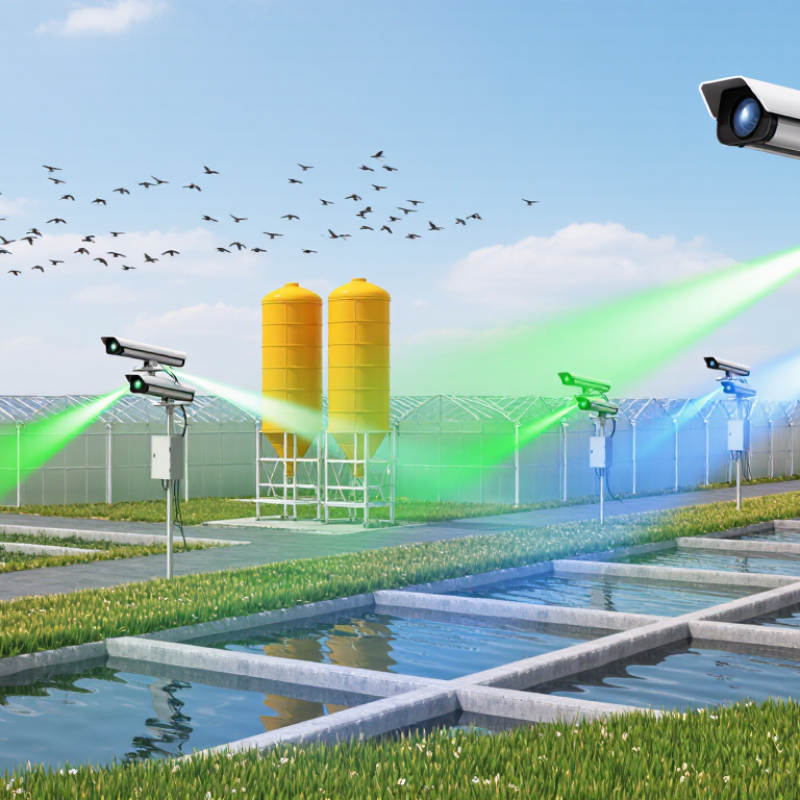
Table of Contents [Hide]
What Are Laser Bird Repellent Systems?
What Are Laser Bird Repellent Systems?
Laser bird repellent systems use controlled light movement to make open areas appear unsafe to birds. A low-power green beam sweeps across roofs, fields, ponds, or airport margins. Birds usually perceive the moving light as a physical threat and leave before landing. The beam moves.
A typical system combines a laser module, programmable scanning patterns, timers, and optional motion sensors. Some units also adjust schedules around sunrise, feeding times, and seasonal migration. The U.S. Federal Aviation Administration’s Wildlife Strike Database recorded 19,367 wildlife strikes at civil airports in 2023; birds represented the overwhelming majority. This figure explains why airports increasingly examine non-contact deterrence methods. However, laser protection requires trained installation and strict control around aircraft, vehicles, roads, and nearby buildings.
The Airport Cooperative Research Program recommends integrated wildlife management rather than relying on one device. Habitat changes, waste removal, sound tools, and monitoring may still be necessary. Field performance depends on bird species, sunlight, vegetation, and local behavior. Results vary. Some birds habituate when the beam pattern never changes. USDA Wildlife Services guidance also emphasizes risk assessment, operator training, and documented maintenance for wildlife deterrent equipment. In practical use, a supplier should provide measurable coverage data, safety procedures, and trial records. Marketing claims alone are not enough. That point is easy to overlook.
China Top 10 Laser Bird Repellent Suppliers - What Are Laser Bird Repellent Systems?
| No. | Evaluation Dimension | Verified Technical Information | Typical System Configuration | Key Supplier Verification Points |
|---|---|---|---|---|
| 1 | Operating Principle | A laser bird repellent system projects a moving or sweeping light beam across bird resting and roosting areas. The visual stimulus is intended to make the location appear unsafe without physical contact. | Laser module, optical lens, pan-and-tilt or scanning mechanism, controller, mounting hardware, and power supply. | Request a clear explanation of the deterrence method, operating limits, and recommended use conditions rather than relying only on marketing claims. |
| 2 | Laser Wavelength and Visibility | Green and red visible wavelengths are commonly considered for bird-deterrence applications. Visibility depends on ambient light, atmospheric conditions, surface reflectivity, and the bird species involved. | Visible laser source with adjustable scanning patterns and a beam designed for controlled ground or surface projection. | Confirm the measured wavelength, optical output, beam divergence, and whether the supplied specification is for optical output or electrical input power. |
| 3 | Coverage and Installation Area | Effective coverage is site-specific. Obstacles, viewing angles, vegetation, buildings, weather, and available mounting height can substantially change the practical protected area. | One or more laser heads positioned to cover feeding, nesting, landing, or roosting zones, with overlapping scan paths where necessary. | Ask for a site survey, coverage drawing, mounting-height recommendation, and a stated method for calculating coverage instead of accepting a universal area figure. |
| 4 | Target Birds and Behavior | Results can vary by species, flock size, habitat, time of day, and food availability. Birds may also become less responsive if the stimulus is predictable or the attractant remains unchanged. | Variable speed, randomized movement, scheduled operation, and integration with other non-lethal bird-management measures. | Check whether field trials or application references are available for the relevant bird species and environment. |
| 5 | Control and Automation | Common control functions include timed schedules, manual override, adjustable scan patterns, remote monitoring, and automatic shutdown under selected conditions. | Local controller, programmable timer, weather sensor interface, network connection, and optional alarm or data-logging functions. | Verify supported communication methods, software access, data ownership, firmware update procedures, and behavior after power or network loss. |
| 6 | Laser and Operator Safety | Laser products must be assessed according to their actual accessible emission and intended installation. IEC 60825-1 is a key reference for laser-product classification and safety information. | Beam-limiting optics, restricted aiming zones, key or password controls, warning labels, interlocks, and configurable exclusion areas. | Request the laser class, test report, user manual, risk assessment, warning labels, and evidence that the beam cannot enter roads, walkways, air corridors, or occupied buildings. |
| 7 | Outdoor Protection and Weather Resistance | Outdoor systems need protection from rain, dust, condensation, temperature changes, vibration, and ultraviolet exposure. IP ratings are defined under IEC 60529 and should be matched to the installation environment. | Sealed enclosure, anti-condensation design, corrosion-resistant mounting parts, thermal management, and protected cable connections. | Confirm the declared IP rating, operating temperature range, salt-mist or corrosion testing where relevant, and maintenance requirements for lenses and enclosures. |
| 8 | Power and Energy Requirements | Energy use depends on laser output, scanning duty cycle, controller electronics, heating or cooling functions, and operating schedule. A published electrical input rating is required for system planning. | AC power supply, DC adapter, or solar-assisted power system with battery storage for suitable remote locations. | Request input voltage, maximum and typical power consumption, surge protection, battery autonomy, cable specifications, and standby consumption. |
| 9 | Compliance and Documentation | Depending on the destination market, buyers may need documentation covering electrical safety, electromagnetic compatibility, laser safety, environmental protection, and radio equipment if wireless functions are included. | Declaration of conformity, test reports, installation instructions, maintenance manual, risk assessment, and spare-parts list. | Verify that certificates identify the exact model, manufacturer, test standard, test laboratory, and product configuration being supplied. |
| 10 | Validation, Service, and Total Cost | Laser bird deterrence is usually most reliable as part of an integrated, non-lethal bird-management plan. Performance should be measured through bird activity records, site inspections, and defined success criteria. | Pilot installation, commissioning report, operator training, preventive maintenance schedule, replacement modules, and after-sales technical support. | Compare equipment, installation, permits, training, maintenance, replacement parts, energy, and monitoring costs over the intended service period. |
Note: Laser bird-repellent performance is site-dependent. Product specifications, safety classifications, regulatory approvals, and coverage claims should be confirmed against current technical documents and the intended installation environment.