
What Is the Uv Lamp Price in China? The answer depends on lamp technology, power, wavelength, materials, certification, and order quantity. In China, a basic low-pressure UV-C lamp may cost about USD 5–30 at wholesale level. Industrial lamps often range from USD 50 to USD 300. UV-C LED modules can cost more, especially when they include cooling systems, drivers, and intelligent controls.
The market is expanding beyond simple replacement bulbs. Fortune Business Insights valued the global UV disinfection equipment market at approximately USD 5.74 billion in 2023. Its report also forecasts continued growth through 2032. Grand View Research similarly identifies water treatment, air purification, and surface disinfection as major demand sectors. These figures explain China’s wide manufacturing base, but they do not create one fixed Uv Lamp Price. Factory quotations still vary sharply.
Dr. James R. Bolton, a recognized UV technology expert, states, “UV dose is the product of UV intensity and exposure time.” That principle matters when comparing quotations. A cheaper lamp may deliver lower output, shorter life, or unstable radiation. It may become expensive after frequent replacement. Ask for measured UV intensity, rated service life, quartz quality, electrical compatibility, and test records. Request samples before placing a large order. That is practical advice.
The price range remains imperfect. Supplier descriptions are not always consistent. Some quotations include packaging and testing, while others exclude them. Buyers should compare complete operating cost, not only the unit price. This guide examines China’s typical Uv Lamp Price by product type, application, quality level, and purchasing volume.
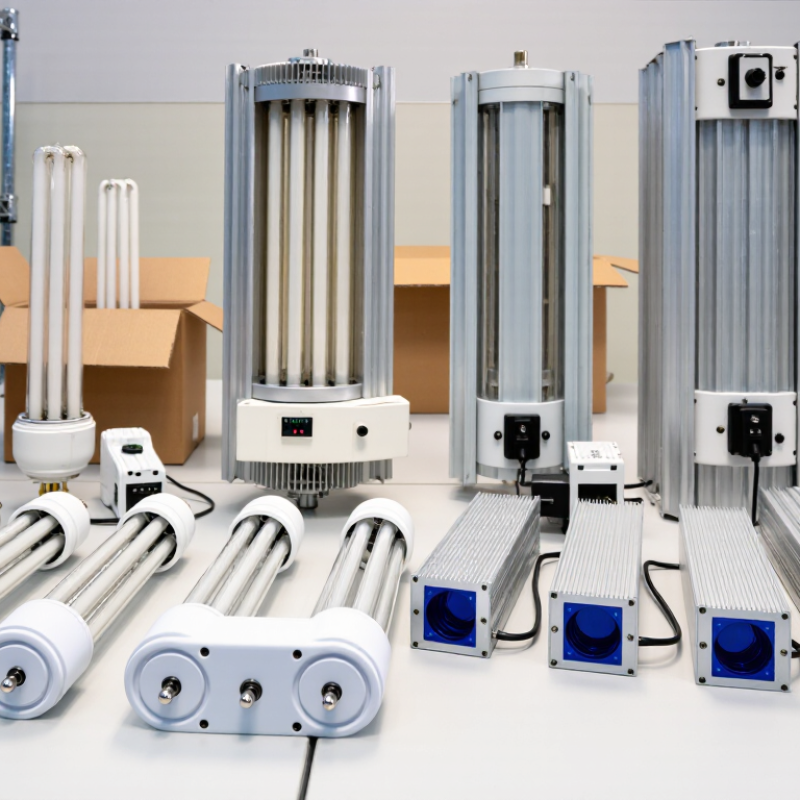
China UV lamp prices vary sharply by wavelength, power, housing, and order quantity. For 185 nm and 254 nm mercury lamps, basic tubes often cost about 30–180 RMB each. Industrial lamps with quartz bodies, stronger output, or special connectors may reach 200–800 RMB. The quotation may exclude the ballast, cable, reflector, and protective housing. This is where many buyers miscalculate.
LED prices follow a different pattern. A 365–405 nm LED module commonly costs 80–600 RMB, depending on chip count, optical lens, cooling design, and rated power. A complete LED curing or inspection unit may cost 500–3,000 RMB.
Wavelength also changes the price. A 365 nm module is often more expensive than a 395 nm version because its chips can be harder to source.
Reliable Chinese suppliers should provide irradiance data, wavelength tolerance, working temperature, and expected service life. Request a sample before confirming a large order. Compare output at a stated distance, not only electrical wattage. That detail matters.
Mercury lamps can offer strong line output, but they need warm-up time and periodic replacement. LED units start quickly and usually give better control, yet their cooling system may fail if the design is weak.
Prices also change with copper, quartz, exchange rates, and custom packaging. These figures are practical estimates, not fixed market rules. My own caution is simple: the cheapest quote may exclude the parts that make the lamp usable.
Factory-direct UV lamp prices often begin at RMB 50–500 for conventional UV tubes. These prices usually cover the tube only, not the ballast, housing, reflector, or freight. A basic low-pressure tube may suit water treatment, curing, or surface disinfection equipment. However, wavelength, wattage, tube diameter, and service life change the quotation quickly.
UV LED units usually start above RMB 1,000. Higher-power systems can cost several thousand yuan after adding cooling, optics, drivers, and control components. The U.S. Department of Energy’s Solid-State Lighting reports note that UV LEDs still face lower efficiency and higher costs than visible LEDs. This explains the large price gap.
MarketsandMarkets estimated the global UV LED market at about USD 1.1 billion in 2024, with continued growth expected through 2029. Demand is rising, but production scale does not remove every cost.
From factory experience, buyers should request test data before comparing prices. Ask for the measured wavelength, irradiance, operating hours, and warranty conditions. A supplier quoting RMB 1,000 may provide only a low-output module. Another may include calibrated optics and thermal protection. The cheaper offer is not automatically cheaper in use. I would also question lifetime claims without thermal test records. Mistakes happen here. Sample testing remains essential. Safety documentation, including photobiological risk information under IEC 62471, should be reviewed before installation.
Industrial UV systems in China commonly cost RMB 8,000–300,000, depending on power, flow rate, chamber material, and control features. Small units handling 5–20 m³/h may sit near RMB 8,000–30,000. Medium systems for 50–150 m³/h often range from RMB 40,000–120,000. High-capacity installations above 300 m³/h can exceed RMB 200,000. These figures reflect typical engineering quotations, not fixed retail prices.
Flow rate matters more than lamp quantity alone. The U.S. EPA UV Disinfection Guidance Manual uses validated dose performance, including a reference dose of 40 mJ/cm² for certain drinking-water applications. The WHO Guidelines for Drinking-water Quality also stresses dose delivery, maintenance, and microbial targets. Therefore, a low-priced unit may become expensive after adding sensors, automatic cleaning, spare lamps, and stainless-steel upgrades. The 2024 Global Water Intelligence market review also identifies industrial reuse and stricter water-quality requirements as major UV demand drivers. That trend is visible in Chinese factory projects.
Check the real numbers.
A reliable quotation should state UV dose, rated flow, water transmittance, lamp life, and testing conditions. Some sellers quote maximum flow using unusually clear water. That can mislead buyers. I would request a performance curve and commissioning record before comparing prices. RMB 8,000 may suit a simple process line, but it rarely represents a complete high-flow treatment package.
What Is the UV Lamp Price in China?
UV lamp prices in China vary widely because the lamp is only one part of the system. A small low-pressure lamp may cost less than a high-output industrial assembly. The required UV dose changes the price quickly. Dose depends on intensity, exposure time, water quality, airflow, and target microorganisms. Dose matters. A quotation without these details can be misleading.
Wavelength also affects the design. Lamps near 254 nanometers are commonly selected for disinfection applications. Other wavelengths may suit curing, analysis, or specialized treatment. Each option requires different quartz materials, drivers, cooling methods, and safety controls. I have seen buyers compare wattage alone, then discover weak performance in real conditions. That mistake is easy to make. Ask for measured irradiance and dose data, not only electrical power.
Lamp life is another major cost driver. Some lamps may operate for thousands of hours, but output gradually declines before failure. Replacement frequency, cleaning access, ballast quality, and operating temperature all influence the actual service cost. CE documentation can increase the quotation because testing and technical files require time. ISO certification usually reflects the manufacturer’s quality system, not automatic product performance. Check the certificate scope carefully. A cheaper lamp can become expensive after installation, calibration, shipping, and frequent replacements. The calculation is not always clean.
Indicative China ex-factory price ranges for generic UV-C lamps, excluding ballast, power supply, reactor housing, freight, and taxes. Actual quotations vary with UV dose, wavelength, lamp life, and CE/ISO documentation requirements.
Low-pressure lamps generally offer the lowest purchase cost, while amalgam and medium-pressure lamps cost more because they deliver higher UV output and dose capacity. Certification, validated lifetime, and custom wavelength requirements can increase the final price.
China UV lamp quotations often range from about US$20 to US$180 for standard low-pressure UV-C units. The gap reflects power, quartz quality, ballast design, and testing documents. Comparing price per watt is more useful than comparing lamp price alone.
Operating hours reveal another cost. Industry specifications commonly estimate 8,000 to 12,000 hours for low-pressure lamps, while output gradually decreases during service. The ASHRAE Handbook notes that temperature, airflow, and aging can reduce ultraviolet performance.
A lamp running 8,000 hours at 100 watts consumes roughly 800 kWh. At US$0.10 per kWh, electricity adds about US$80. That can exceed the initial purchase price.
The EPA UV Disinfection Guidance Manual explains that performance depends on delivered dose, measured in mJ/cm², not electrical wattage alone. A practical quote should show irradiance at a stated distance, exposure time, and tested dose.
My comparison remains imperfect because suppliers may report peak output rather than verified dose. That small difference can distort the real cost per mJ/cm².
Safety documentation should also align with ISO 15858 and local electrical requirements.
By continuing to use the site, you agree to the use of cookies. more information
The cookie settings on this website are set to "allow cookies" to give you the best browsing experience possible. If you continue to use this website without changing your cookie settings or you click "Accept" below then you are consenting to this.