
Blog

Why Choose Aluminum Profile for Pergola?

When homeowners compare pergola materials, aluminum often appears practical rather than merely fashionable. Aluminum Profile For Pergola systems create clean lines, stable spans, and a lighter structural frame. In real installations, this reduced weight can simplify handling on narrow patios or raised decks. It also resists rust, unlike untreated steel exposed to rain and salt air. A good profile is not just hollow metal. Its wall thickness, alloy, finish, and connection design affect performance. Check the supplier’s technical data. That step matters.

Experienced installers usually assess wind exposure, drainage, roof loads, and the existing foundation before selecting sections. A coastal garden may need a durable powder coating and carefully isolated fasteners. In hot climates, pale finishes can reduce surface heat, although they cannot remove solar gain. Aluminum also expands and contracts with temperature changes. Proper joints allow movement without creating stress or visible gaps. Certified engineering calculations remain important for larger, motorized, or louvered pergolas. Product claims alone are not enough. Ask for test reports, warranty terms, and installation guidance from a traceable manufacturer.

The material has limits. Aluminum can dent more easily than heavy steel, and poor profiles may flex during strong gusts. Thermal comfort still depends on shading, ventilation, and orientation. I have seen attractive frames fail because drainage was overlooked. That experience is easy to dismiss, but it should shape better decisions. Choose Aluminum Profile For Pergola when its weight, corrosion resistance, appearance, and maintenance needs suit the site. Inspect the finish, hardware, and fasteners yearly. Small checks prevent expensive surprises. Not every patio needs aluminum. The right choice follows evidence, climate, and honest planning.
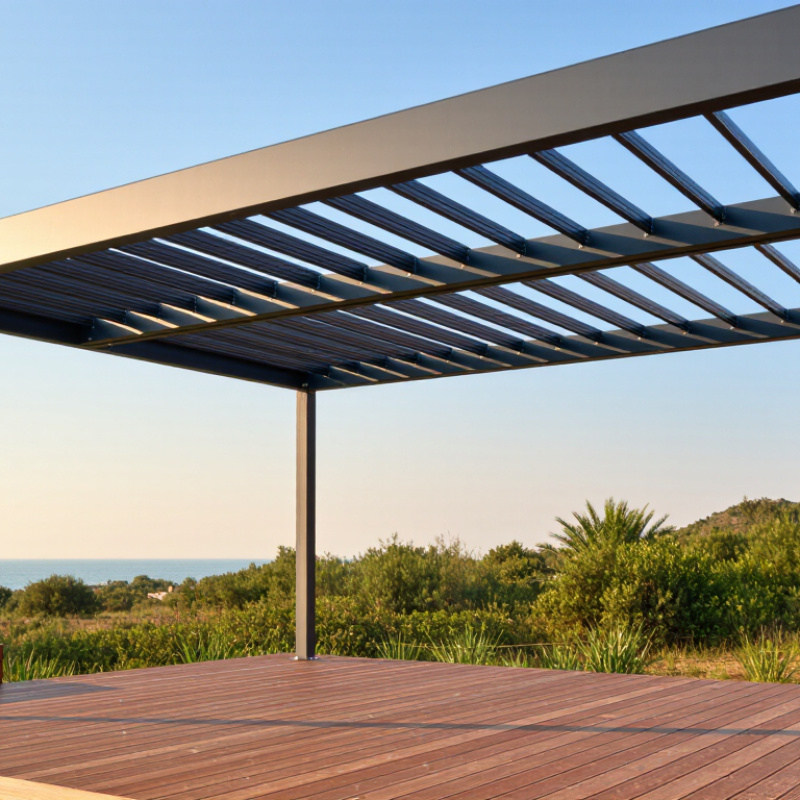
Why Choose Aluminum Profile for Pergola?

What Is an Aluminum Profile Pergola?

An aluminum profile pergola is an outdoor shade structure built from engineered aluminum sections. These profiles are usually extruded into hollow beams, posts, rafters, and channels. Their shapes provide strength while reducing unnecessary weight. Unlike a simple patio cover, a pergola may include adjustable louvers, fixed roofing, screens, lighting channels, or integrated drainage.

In practical installations, the profiles connect through brackets, concealed fasteners, and reinforced joints. A powder-coated surface helps resist moisture, sunlight, and everyday scratches. Aluminum also does not rust like untreated steel, which matters in humid gardens or coastal areas. However, it is not maintenance-free. Dust can block drainage paths, and loose connections may create movement during strong wind. Regular inspection still matters.

A well-designed system begins with accurate site measurements. Post spacing, roof angle, foundation depth, and local wind or snow requirements must be checked by qualified professionals. I have found that drainage is often underestimated. Water should move through internal channels and exit away from seating areas. Small details matter. Aluminum profiles also allow clean lines and flexible layouts, but poor cutting or weak anchoring can reduce performance. The material is reliable when its engineering matches the site, the climate, and the way people actually use the pergola.

How Aluminum Profiles Support Pergola Structure and Design

Why Choose Aluminum Profile for Pergola?

Aluminum profiles give pergolas a practical structural frame without making the space feel heavy. Their density is about 2.7 g/cm³, roughly one-third that of steel, according to engineering materials data. This lower weight helps installers handle beams, posts, and adjustable louvers more easily. It can also reduce foundation demands, but soil conditions still require professional review.

Profile geometry matters more than appearance alone. Hollow sections can resist bending while keeping material use efficient. Internal channels also support concealed drainage, lighting wires, and fasteners. In real installations, clean lines depend on accurate cutting and joint alignment. A small error can make a roof panel bind or leave water near a connection. The International Aluminium Institute reports that recycling aluminum can save up to 95% of the energy used for primary production. It also reports that about 75% of all aluminum ever produced remains in use. These figures support long service planning, though they do not replace corrosion checks or engineering calculations.

Tips: Choose profiles with enough wall thickness for local wind and snow loads. Add drainage paths before installation. Use compatible fasteners. I would not assume every lightweight section is strong enough; that shortcut needs reconsideration. Dark finishes may also absorb more heat than expected, especially under direct summer sun. Examine samples outdoors before approving the final color.

Why Aluminum Profiles Resist Weather, Rust, and Wear

Why Choose Aluminum Profile for Pergola?

Why Aluminum Profiles Resist Weather, Rust, and Wear

A pergola faces rain, sunlight, dust, and daily contact. Aluminum forms a thin oxide film that renews after minor surface damage. This barrier slows further oxidation. It does not behave like iron rust. The Aluminum Association identifies this oxide layer as a major reason for aluminum’s corrosion resistance. Quietly effective.

The USGS Mineral Commodity Summaries 2024 lists aluminum density at 2.70 g/cm³. Steel is about 7.85 g/cm³. Lower weight can reduce frame loads and simplify installation. Yet performance depends on alloy, wall thickness, span, and connection design. A light profile is not automatically safe. Engineers should verify local wind loads and drainage details.

Surface finishing matters. Anodizing hardens the outer surface, while architectural powder coatings add color and weather protection. AAMA 2604 and AAMA 2605 provide benchmarks for coating performance, including color change, chalking, and adhesion. These tests are not promises for every climate. Coastal salt, trapped water, and abrasive cleaning can still shorten service life. Rinse the frame periodically. Avoid harsh tools. The International Aluminium Institute reports that recycling aluminum uses about 95% less energy than primary production. That supports a lower-impact material choice, although recycled content and coating removal need checking. The honest weakness? Aluminum can dent, and poor movement details may create noise or leaks.

Why Choose Aluminum Profile for Pergola? - Why Aluminum Profiles Resist Weather, Rust, and Wear

Performance Dimension Aluminum Profile Carbon Steel Stainless Steel Timber uPVC
Resistance to Rain and Humidity Forms a thin, tightly bonded aluminum-oxide layer that helps protect the underlying metal from further oxidation. Requires paint, galvanizing, or another protective system because exposed steel can oxidize quickly in moisture. Generally strong resistance due to its chromium-rich passive film, but performance depends on grade and environment. Can absorb moisture, swell, shrink, crack, or decay if not properly detailed and maintained. Does not rust, but prolonged ultraviolet exposure, temperature changes, and impact can affect its service performance.
Rust and Corrosion Behavior Does not form iron-based rust. It can still experience pitting or galvanic corrosion in saltwater, polluted, or poorly drained conditions. Prone to red-rust formation when its protective coating is damaged or neglected. High corrosion resistance in many outdoor applications; unsuitable grades may stain or pit in chloride-rich environments. Not a metal, so it does not rust; biological decay and moisture-related damage remain possible. Does not rust, although fittings, fasteners, and embedded metal components may corrode if not protected.
Typical Density Approximately 2.70 g/cm³ Approximately 7.85 g/cm³ Approximately 7.7–8.0 g/cm³ Approximately 0.30–0.90 g/cm³, depending on species and moisture content Approximately 1.35–1.45 g/cm³
Weight and Installation Lightweight compared with steel, making handling, cutting, and modular installation easier when the profile is correctly engineered. Heavier than aluminum and may require more substantial handling equipment and structural support. Strong but relatively heavy, which can increase handling and installation requirements. Light to moderate weight, but dimensions and moisture content can vary naturally. Lightweight, although large sections may require reinforcement to control deflection.
Surface Protection Options Can be anodized or powder coated. Anodizing integrates an oxide layer into the surface; powder coating adds a decorative protective film. Commonly protected with galvanizing, paint, or powder coating; damaged areas may need prompt repair. Often used without an additional coating, although polished, brushed, or protective finishes may be specified. Usually protected with paint, stain, oil, or a suitable exterior wood treatment. Color is generally incorporated into the material, with limited options for refinishing compared with coated metals.
Wear and Scratch Resistance Bare aluminum is relatively soft; anodized or properly applied powder-coated surfaces provide better resistance to routine abrasion and handling. Hard and wear-resistant, but corrosion can begin where a coating is cut or heavily scratched. High resistance to ordinary outdoor wear; surface finish can still scratch under abrasive contact. Can dent, scratch, splinter, and weather over time without regular maintenance. Resists normal moisture exposure but can be scratched, dented, or affected by impact and heat.
Dimensional Stability Does not swell or rot from moisture. Its thermal expansion is approximately 23.1 × 10⁻⁶/°C, so expansion joints and suitable fasteners are important. Thermal expansion is approximately 11.7 × 10⁻⁶/°C; corrosion protection and drainage details remain important. Thermal expansion is generally close to carbon steel, depending on grade. Movement varies with moisture, grain direction, species, and temperature; proper detailing is essential. Has relatively high thermal movement, commonly around 50–80 × 10−6/°C, so installation clearances are required.
Maintenance Requirements Usually limited to periodic cleaning with water and a mild detergent, plus inspection of drainage paths, joints, coatings, and fasteners. Requires regular inspection for coating damage, exposed metal, and rust, especially in humid or coastal locations. Needs routine cleaning to remove salt, dirt, and deposits; crevices and incompatible fasteners should be checked. Needs periodic inspection, cleaning, sealing, and refinishing to manage moisture and ultraviolet exposure. Generally low maintenance, but discoloration, brittleness, movement, and hardware condition should be monitored.
Coastal and Salty Environments Suitable when the alloy, finish, drainage, and fasteners are selected for the exposure. Contact with dissimilar metals should be isolated to reduce galvanic corrosion. Needs a robust, continuously maintained corrosion-protection system and careful detailing. Can perform well when the correct corrosion-resistant grade is selected and deposits are regularly removed. Can be used with appropriate design and treatment, but salt, moisture, and ultraviolet exposure increase maintenance demands. Material itself does not rust, but structural hardware and connections still require corrosion-resistant specification.
Recyclability Highly recyclable and can be remelted into new aluminum products, provided it is collected and processed through an appropriate recycling system. Widely recyclable, although coatings and mixed assemblies may require separation or processing. Highly recyclable, subject to collection and scrap-processing infrastructure. Can be reused or recycled in some applications; treated, painted, or composite wood may have limited recycling routes. Recycling availability depends on local collection systems and product composition.

Note: Performance varies with alloy, profile design, coating system, installation quality, drainage, local climate, and exposure to salt or pollutants. Aluminum is corrosion-resistant rather than completely corrosion-proof.

How Aluminum Profiles Improve Pergola Functionality and Comfort

Why Choose Aluminum Profile for Pergola?

How Aluminum Profiles Improve Pergola Functionality and Comfort

Aluminum profiles make pergolas lighter, stronger, and easier to adjust. The Aluminum Association states that aluminum weighs about one-third as much as steel. This lower weight reduces structural loads and simplifies installation on patios, balconies, and rooftop terraces. In field projects, installers also value the clean cuts and repeatable connections. The result feels solid. It is not magic, though. Thin profiles can flex when spans are too wide, so profile thickness and internal reinforcement need careful engineering.

Comfort depends on more than appearance. Adjustable aluminum louvers can control sunlight, rain, and airflow throughout the day. The U.S. Department of Energy reports that exterior shading can reduce solar heat gain by up to 65% on south-facing windows and 77% on west-facing windows, depending on orientation and conditions. A pergola cannot copy every window result. Still, its adjustable roof can create cooler seating areas, reduce glare, and protect furniture from direct weather exposure. Correct drainage channels matter, especially during sudden summer rain.

Durability also supports long-term functionality. Aluminum resists corrosion through its natural oxide layer, although salty coastal air still demands suitable finishes and regular inspection. The International Aluminium Institute reports that recycling aluminum requires about 95% less energy than producing primary aluminum. That strengthens its lifecycle value, but maintenance remains necessary. Designers should check fasteners, drainage paths, and moving joints each season. Small oversights become loud rattles later.

Why Choose Aluminum Profile for Pergola?

How Aluminum Profiles Improve Pergola Functionality and Comfort

Aluminum has a typical density of about 2,700 kg/m³, compared with approximately 7,850 kg/m³ for carbon steel. This lower weight can simplify transportation, handling, and installation while still providing a rigid profile structure for pergola frames. Softwood is lighter, but it generally requires more maintenance to manage moisture, dimensional movement, and biological deterioration. Values shown are typical engineering reference values and can vary by alloy, steel grade, or wood species.

What to Consider When Choosing Aluminum Profiles for a Pergola

Why Choose Aluminum Profile for Pergola?

What to Consider When Choosing Aluminum Profiles for a Pergola

Aluminum profiles offer a strong, lightweight frame for outdoor pergolas. Their clean lines also suit modern gardens and commercial terraces. However, choosing the right profile requires more than checking its appearance. Start with the pergola’s span, roof weight, and local wind or snow conditions. A narrow section may look elegant but bend under repeated loads. Do not guess.

In practical installations, alloy grade and wall thickness often matter more than polished surfaces. Ask for technical data, including tensile strength, deflection limits, and dimensional tolerances. Profiles with internal reinforcement can support wider openings without adding excessive weight. Connections deserve equal attention. Weak brackets can compromise a strong frame. Stainless fasteners and suitable isolation materials help reduce galvanic corrosion between different metals.

The finish should match the environment. Powder coating can protect against moisture, sunlight, and routine abrasion, but damaged areas still need prompt repair. Coastal air requires extra attention to coating quality and drainage design. Water trapped inside a profile may create hidden corrosion. I have seen small alignment errors become visible after roof panels were installed. Rechecking measurements feels slow, yet it prevents expensive adjustments. Thermal expansion is easy to overlook, especially on long beams exposed to direct afternoon sun. Leave the movement space specified by the engineer, and confirm every detail against applicable building requirements.

By continuing to use the site, you agree to the use of cookies. more information

The cookie settings on this website are set to "allow cookies" to give you the best browsing experience possible. If you continue to use this website without changing your cookie settings or you click "Accept" below then you are consenting to this.

Close